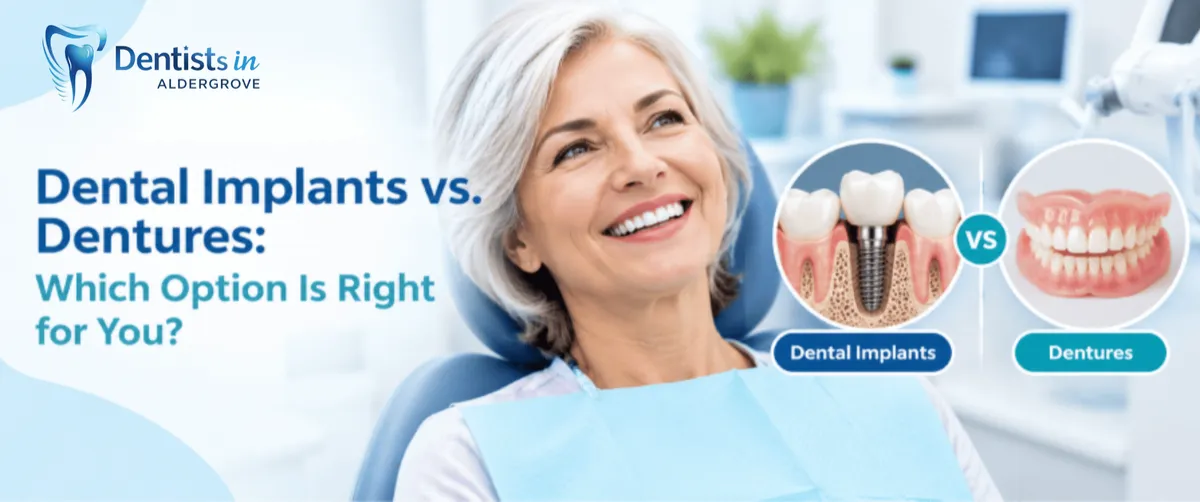
Dental Implants vs. Dentures: Which Option Is Right for You?
Losing a tooth can change more than your smile. It can affect how you chew, how you speak and how comfortable you feel during everyday activities. When several teeth are missing, even simple things like enjoying your favourite meal may become more difficult.
Fortunately, there are several ways to replace missing teeth. Two of the most familiar options are dental implants and dentures.
But which one is right for you?
The answer depends on how many teeth are missing, your oral health, your treatment goals and the type of tooth replacement that suits your circumstances. Some people may benefit from dental implants, while others may find that dentures are a practical option.
Understanding the difference between dental implants vs dentures can help you have a more informed conversation with your dentist.
What Are Dental Implants?
Dental implants are a tooth replacement option designed to replace missing teeth with a restoration supported by an implant placed in the jawbone.
A typical dental implant treatment involves three main parts:
Implant: A small post, commonly made from titanium, that is placed into the jawbone.
Abutment: A connector that joins the implant to the replacement tooth.
Crown: The visible tooth-shaped restoration attached to the implant.
The implant acts as a foundation for the replacement tooth. Over time, the implant can bond with the surrounding bone through a process called osseointegration.
How Dental Implants Work
Dental implant treatment usually involves several stages.
First, the dentist assesses your oral health, the condition of your jawbone and the location of the missing tooth. Imaging may be used to help plan treatment.
The implant is then placed into the jawbone. During healing, the bone can grow around the implant and help provide stability.
Once the implant has healed sufficiently, the dentist can attach the appropriate restoration.The complete process takes time and the treatment timeline varies from patient to patient.
What Are Dentures?
Dentures are removable dental appliances designed to replace missing teeth and surrounding gum tissue.
They can be used to replace several missing teeth or an entire arch of teeth.
There are two common types of dentures:
Complete Dentures
Complete dentures replace all the teeth in the upper jaw, lower jaw or both.
They are designed to restore the appearance of a full set of teeth and support everyday activities such as speaking and eating.
Partial Dentures
Partial dentures replace some missing teeth when other natural teeth remain.
They may use clasps or other components to help keep the appliance in position, depending on the design.
Dentures are removable, which means they can be taken out for cleaning and as instructed by the dentist.
Dental Implants vs. Dentures: What Is the Difference?
Both dental implants and dentures can help replace missing teeth, but they work in different ways.
Dental implants are anchored into the jawbone, while conventional dentures rest on the gums and are removed by the wearer.
Here are the main differences to consider.
1. Stability and Support
Dental implants are placed into the jawbone and can provide a stable foundation for replacement teeth.
Conventional dentures rest on the gums and may move during chewing or speaking, particularly if the fit changes.
Implant-supported dentures are another option. They use implants to help support a removable denture and can provide greater stability than conventional dentures.
The right choice depends on your needs and the type of restoration being considered.
2. Appearance
Both dental implants and dentures can be designed to resemble natural teeth.
The appearance of a replacement tooth depends on factors such as the restoration, materials, colour, shape and the dentist's treatment plan.
Implants can support individual crowns that are designed to fit with the surrounding teeth.
Dentures replace missing teeth and gum tissue with a removable appliance.Your dentist can explain what each option may look like for your smile.
3. Comfort and Everyday Use
A well-fitting tooth replacement should be comfortable and functional.
Dental implants are fixed into the jawbone, so they do not need to be removed for everyday use.
Conventional dentures are removable and may require an adjustment period while you become familiar with wearing them.
Some people find dentures comfortable once they are used to them, while others may prefer the stability of an implant-supported restoration.
Comfort depends on the fit, design oral health and individual circumstances.
4. Cleaning and Maintenance
Dental implants and dentures require regular care.
Implant-supported teeth need brushing, cleaning around the restoration and professional dental maintenance.
Dentures should be removed and cleaned as instructed. The gums and any remaining natural teeth also need attention.
Good oral hygiene helps protect your remaining teeth and the tissues supporting your tooth replacement.
Dental Implants vs. Dentures: Which Is Better for Missing Teeth?
There is no single option that is best for everyone.
The most suitable missing teeth treatment depends on the number of teeth missing, the condition of your jawbone, your oral health, your preferences and the treatment options available to you.
When Dental Implants May Be a Suitable Option
Dental implants may be considered when:
You are missing one or more teeth.
You want a fixed tooth replacement.
Your jawbone and gums can support implant treatment.
You are comfortable with a treatment process that may take several months.
You want to avoid removing a conventional denture.
You are searching for a long-term tooth replacement option.
Implants are not suitable for every patient. A dental assessment is needed to determine whether they are appropriate.
When Dentures May Be a Suitable Option
Dentures may be considered when:
You are missing several teeth.
You need to replace an entire arch of teeth.
You prefer a removable tooth replacement.
You want an option that does not involve placing implants into the jawbone.
Your oral health or bone condition makes conventional dentures a more appropriate option.
You are searching for a tooth replacement that can be planned around your needs and budget.
Dentures can be a practical solution for many patients, including those who are not candidates for implant treatment.
What Factors Affect Your Tooth Replacement Options?
Before recommending a treatment, your dentist will consider several aspects of your oral health.
Number of Missing Teeth
Replacing a single missing tooth is different from replacing several teeth or an entire arch.
For one missing tooth, an implant-supported crown may be considered. For multiple missing teeth, options may include bridges, implant-supported restorations, partial dentures or other treatments.
The number and location of missing teeth help determine which options are available.
Jawbone Health
Dental implants require sufficient bone to provide support.
When a tooth has been missing for a long time, the jawbone in that area may gradually lose volume. This can affect implant treatment planning.
Your dentist may use dental imaging to assess the available bone and determine whether additional treatment is needed.
Bone grafting may be an option for some patients, but it is not required in every case.
Gum Health
Healthy gums are important for tooth replacement.
Gum disease can affect the tissues supporting natural teeth and may need to be treated before certain restorative procedures.
Your dentist will assess your gums and overall oral health before recommending treatment.
Your General Health and Treatment Goals
Your general health, medications, smoking habits and ability to maintain oral hygiene can influence treatment planning.
Your dentist will also consider what matters most to you.
For example, you may be most concerned about chewing comfortably, replacing a front tooth, improving the fit of a denture or finding a removable option.
These details help guide the treatment discussion.
How Much Do Dental Implants Cost Compared With Dentures?
Cost is an important part of choosing a tooth replacement option.
However, the total price can vary considerably depending on the treatment plan.
The dental implants Aldergrove cost for one patient may differ from that of another patient because of the number of implants, the type of restoration and any additional procedures required.
What Can Affect Dental Implant Cost?
Factors may include:
Number of implants required
Type of replacement tooth or restoration
Diagnostic imaging and planning
Bone grafting, if needed
Additional dental treatment
Follow-up appointments
Restoration and maintenance requirements
What Can Affect Denture Cost?
Denture pricing may depend on:
Partial or complete dentures
Number of teeth being replaced
Materials and design
Dental impressions or scans
Adjustments and follow-up visits
Replacement or repair needs
When comparing costs, ask what is included in the total treatment fee.
A lower initial price does not necessarily mean lower costs over the entire treatment period.
How Long Do Dental Implants and Dentures Last?
The lifespan of a tooth replacement depends on the type of restoration oral hygiene, maintenance and individual circumstances.
Dental Implant Lifespan
Dental implants are designed to provide a long-term foundation for replacement teeth.
The implant itself and the visible restoration are different components, so they may have different maintenance and replacement needs.
Good oral hygiene, regular dental visits and care around the implant are important for long-term results.
Denture Lifespan
Dentures can last for several years with proper care, but they may eventually need adjustment, repair or replacement.
Changes in the gums and jawbone can affect how well dentures fit over time.
If your dentures become loose, uncomfortable or difficult to use, a dental assessment can help determine whether an adjustment or replacement is needed.
Can You Get Dental Implants If You Have Bone Loss?
Bone loss does not automatically mean that dental implants are impossible.
However, implants require suitable bone support and the amount of available bone is an important part of treatment planning.
Depending on the situation, a dentist may discuss additional procedures, such as bone grafting, before implant placement.
A dental examination and imaging are needed to determine whether implant treatment is appropriate for you.
Are Implant-Supported Dentures an Option?
Yes, implant-supported dentures are another type of tooth replacement.
Unlike conventional dentures, which rest on the gums, implant-supported dentures use dental implants to help provide support.
They may be removable or fixed, depending on the design.
How Implant-Supported Dentures Differ From Conventional Dentures
Conventional dentures rest on the gums and can be removed by the wearer.
Implant-supported dentures use implants for additional support, which may improve stability.
This option may be worth discussing if you want the coverage of a denture but are also interested in the support provided by implants.
Your dentist can explain whether implant-supported dentures are suitable for your oral health and treatment goals.
What Happens During a Dental Implant or Denture Consultation?
A consultation is an opportunity to discuss your missing teeth and understand your treatment options.
Your dentist may:
Examine your teeth, gums and bite.
Review your dental and medical history.
Assess the areas where teeth are missing.
Take dental X-rays or other imaging if needed.
Discuss your treatment goals.
Explain the available tooth replacement options.
Discuss the expected treatment timeline and cost.
You can also ask questions about maintenance, comfort, eating and the expected lifespan of the restoration.
The goal is to understand which option best fits your needs.
Questions to Ask Your Dentist About Tooth Replacement
Before choosing dental implants or dentures, consider asking:
About Treatment Suitability
Which tooth replacement options are suitable for me?
Do I have enough bone for dental implants?
Are my gums healthy enough for treatment?
Would a bridge or another restoration be an option?
What are the benefits and limitations of each treatment?
About Treatment Time and Cost
How long will treatment take?
Will I need additional procedures?
What is the total estimated cost?
What is included in the treatment fee?
Will I need follow-up appointments?
What maintenance costs should I expect?
About Everyday Care
How do I clean the replacement teeth?
Will I be able to eat normally?
How often should I visit the dentist?
What should I do if the restoration becomes loose or uncomfortable?
A clear conversation can help you feel more prepared to make a decision.
Dental Implants Aldergrove: Finding the Right Tooth Replacement Option
If you are searching for dental implants Aldergrove, it is worth considering the full range of tooth replacement options available to you.
Dental implants and dentures both have a place in restorative dentistry. The right choice depends on your dental health, the number of missing teeth, treatment goals and personal preferences.
Dentists in Aldergrove provides restorative dental care for damaged, decayed and missing teeth, including dental implants and other restorative treatments. The clinic also describes its approach as personalized care supported by modern technology.
A consultation can help you understand your options and decide which type of tooth replacement fits your needs.
Frequently Asked Questions
Are dental implants better than dentures?
Neither option is automatically better for every patient. Dental implants provide a fixed tooth replacement option, while conventional dentures are removable. The best choice depends on oral health, bone support, the number of missing teeth, treatment goals and budget.
What is the difference between dental implants and dentures?
Dental implants are placed into the jawbone and support a replacement tooth or restoration. Conventional dentures are removable appliances that replace missing teeth and surrounding gum tissue. Implant-supported dentures combine denture coverage with implant support.
Are dental implants more expensive than dentures?
Dental implants often involve a higher initial treatment cost, but the total price varies depending on the number of implants, restoration, additionalprocedures and maintenance. Denture costs also vary according to the type and design. A detailed treatment quote is the best way to compare options.
Do dentures feel like natural teeth?
Dentures can restore the appearance of teeth and support chewing and speaking. However, they may feel different from natural teeth, particularly during the adjustment period. A well-fitting denture can improve comfort and function.
What happens if I do not replace missing teeth?
Missing teeth can affect chewing, speech and the balance of your bite. Depending on the location and number of missing teeth, surrounding teeth may shift. Your dentist can discuss whether replacement is recommended for your situation.
Can I get dental implants if I have gum disease?
Gum disease may need to be treated before implant placement. The dentist will assess your gums and overall oral health to determine whether implant treatment is appropriate.
How do I choose between implants and dentures?
Start with a dental assessment. Discuss the number of missing teeth, bone and gum health, treatment goals, expected costs, maintenance and treatment time. Your dentist can explain the available options and help you make an informed decision.


